Product roadmap
This page describes SkillFlaw's currently confirmed product roadmap. The roadmap is written from a capability-building perspective. It explains the next core directions that the platform is expected to strengthen, rather than making date-based release promises.
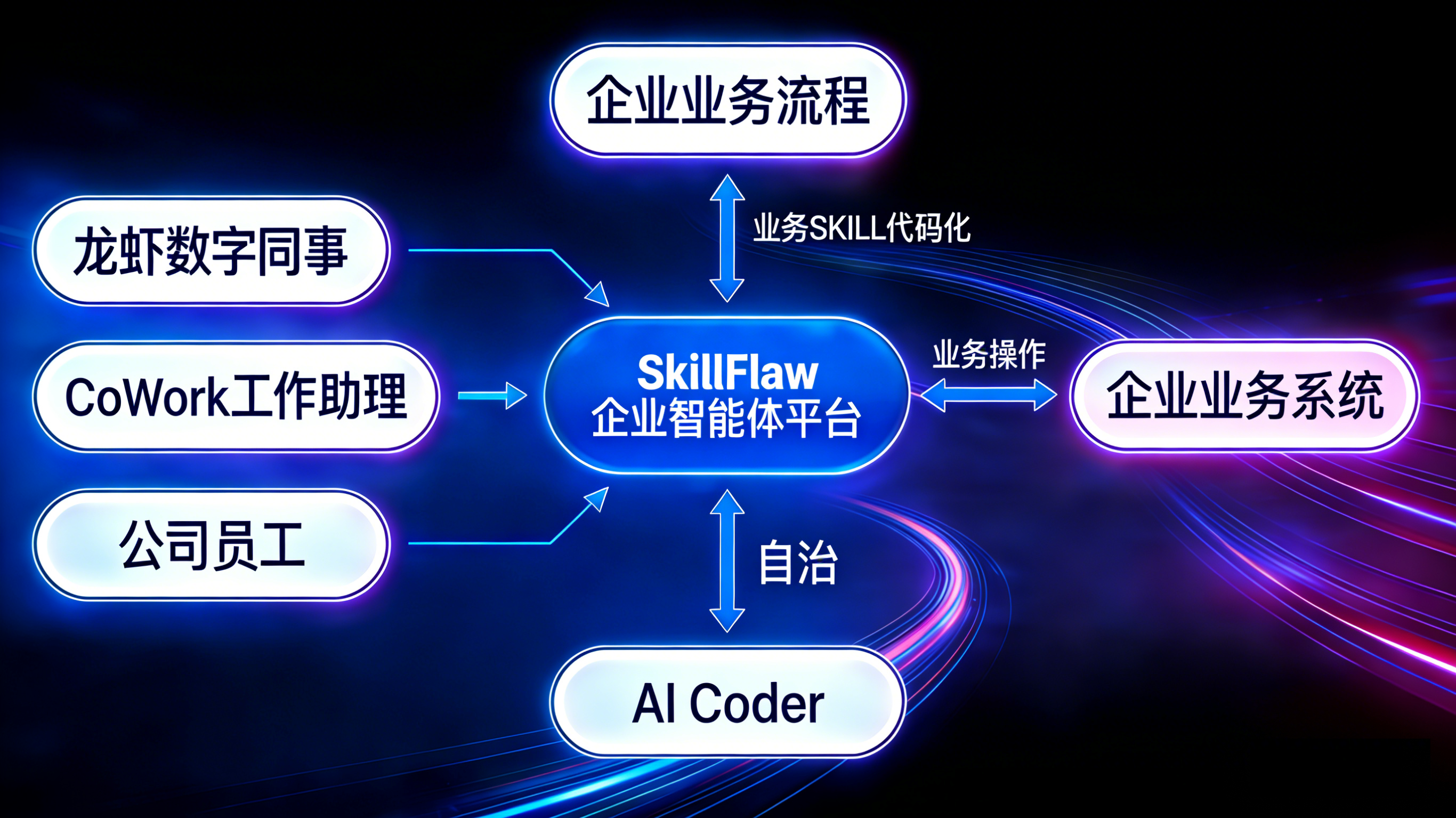
Roadmap overview
The current product roadmap is organized into three parts:
- support full TypeScript
- support go-live approval
- use different container images for different tenants, businesses, and workflows, together with resource scheduling
Part 1: support full TypeScript
The first part of the roadmap is to strengthen TypeScript support across platform capability, runtime capability, and extensibility.
This does not only mean continuing to use TypeScript on the frontend. It means moving more critical platform capability into a more consistent TypeScript-based development, extension, and maintenance experience.
This direction focuses on:
- providing end-to-end TypeScript support for major platform capabilities
- improving type consistency across frontend, backend-facing integration points, and toolchains
- offering a more unified language foundation for component development, business integration, and platform extensibility
Its value is to reduce cross-layer collaboration cost and make the platform easier to extend, maintain, and standardize.
Part 2: support go-live approval
The second part of the roadmap is to introduce formal go-live approval capability into the business delivery path.
As SkillFlaw moves from experimental flows to formal business capability, publication must carry clearer review, confirmation, and accountability boundaries. Adding go-live approval moves the platform from merely publishable delivery toward governed delivery.
This direction focuses on:
- establishing formal approval stages before workflows, skills, or related business capabilities go live
- adding review, confirmation, and responsibility records before publication
- aligning go-live actions with enterprise governance and change-control requirements
Its value is to improve the stability, traceability, and governance quality of formal delivery, making the platform more suitable for enterprise-grade publication processes.
Part 3: different container images for different tenants, businesses, and workflows, with resource scheduling
The third part of the roadmap is to strengthen runtime isolation, environment adaptability, and resource scheduling capability.
When different tenants, business domains, and workflows have different dependency stacks, runtime environments, and resource requirements, the platform needs to support selecting different container images by object boundary and schedule resources consistently on top of that model.
This direction focuses on:
- allowing different tenants to use different runtime container images
- allowing different business scenarios to use different runtime container images
- allowing different workflows to choose runtime container images based on their own dependencies
- implementing unified resource scheduling across multiple runtime images and runtime requirements
Its value is to let the platform satisfy isolation, elasticity, differentiated runtime requirements, and resource-efficiency goals at the same time, supporting more complex enterprise deployment and delivery scenarios.
Why these three parts matter together
- development and extensibility enhancement: full TypeScript support improves consistency and engineering efficiency
- delivery governance enhancement: go-live approval improves the governance level of formal publication
- runtime capability enhancement: differentiated container images with resource scheduling improve enterprise runtime capability
Together, these three directions cover the next-stage strengthening of SkillFlaw's development system, release-governance system, and runtime system, forming the main line of the product roadmap.